
Beaujolais nouveau
Natural, organic and biodynamic Beaujolais nouveau
Every third Thursday of November, the wine festivities are in full swing: it's time for Beaujolais Nouveau! Behind this sometimes controversial primeur wine lies a fine story of terroir, grape variety and committed winemakers who are restoring this tradition's reputation. Discover our selection of natural Beaujolais Nouveau: fresh, lively and 100% Gamay.
4 products


All about Beaujolais Nouveau
When is Beaujolais Nouveau released?
Beaujolais Nouveau is traditionally released for sale every third Thursday of November. This official date marks the start of the primeur wine festivities, less than two months after the harvest. It is a moment eagerly awaited by lovers of festive wine, but also a symbolic event celebrating the end of the harvest in Beaujolais. The cuvées are generally bottled very quickly, giving fresh, fruity, easy-drinking wines, perfect for the first autumn evenings.
Which grape variety is used for Beaujolais Nouveau?
The only grape variety in Beaujolais Nouveau is Gamay noir à jus blanc, the emblematic grape of Beaujolais. Known for its liveliness, freshness and vibrant fruit, Gamay is vinified very quickly here, with carbonic or semi-carbonic maceration, to produce a light, low-tannin, highly aromatic wine with notes of cherry, raspberry, banana or pear drops depending on the vinification. In natural or sulphite-free versions, Gamay can reveal more authentic aromas, with crunchy red fruit and great drinkability.
Does Beaujolais Nouveau keep?
By definition, Beaujolais Nouveau is a primeur wine, meant to be drunk within the year after bottling. It is therefore not designed for long ageing. However, some cuvées from natural winemaking, with little or no added sulphites, can surprise with how well they hold up after several months, or even more than a year, especially when well stored.
That said, to fully enjoy its fruity, juicy and light profile, it is best to drink Beaujolais Nouveau within six months of its release. It is a spontaneous wine for sharing, to be enjoyed without waiting.
What to eat with Beaujolais Nouveau?
Beaujolais Nouveau is a convivial wine that calls for simple, comforting food. It pairs very well with charcuterie (rosette, dry sausage, jambon persillé), soft cheeses (brie, reblochon, camembert) or a quiche lorraine. As for hot dishes, it goes wonderfully with savoury tarts, gratins, œufs en meurette or a light raclette.
For a more original touch, it can be served slightly chilled with Asian dishes (gyozas, stir-fried noodles) or tapas. Its lightness and fruit make it a very versatile wine at the table.
Why does Beaujolais Nouveau have a bad image?
Beaujolais Nouveau long suffered from an overly commercial marketing image: quickly vinified, standardised, with artificial aromas, it had its heyday in the 1980s before declining in quality… and reputation. As a result, it is often seen as a "little wine" of no interest.
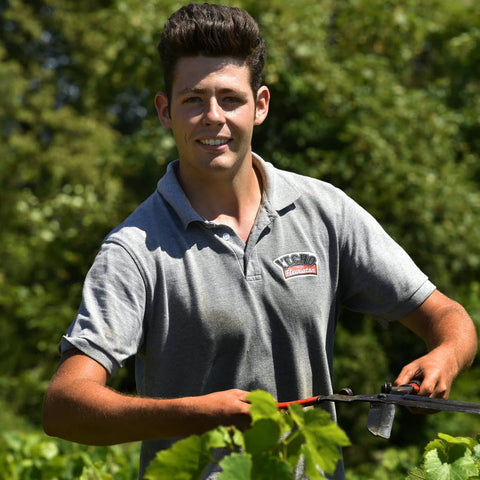
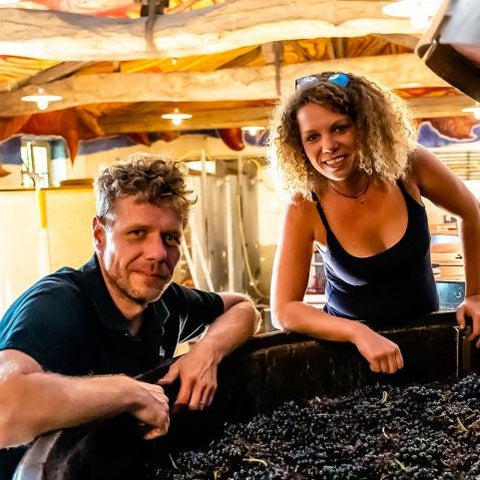
But things are changing. Over the last ten years or so, many committed winemakers have given Beaujolais Nouveau new meaning, offering natural cuvées without additives, more digestible, respectful of the grape and the terroir. Today, it appeals to a new generation of wine lovers looking for living, honest wines.
Who makes the best Beaujolais Nouveau?
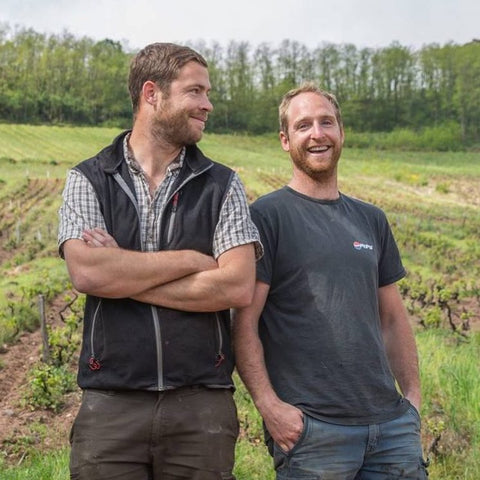
Several committed winemakers now produce top-level Beaujolais Nouveau, far from the clichés. One example is Domaine Guy Breton, a pioneer of natural wine in the region, whose cuvées are remarkably fresh while keeping real depth.
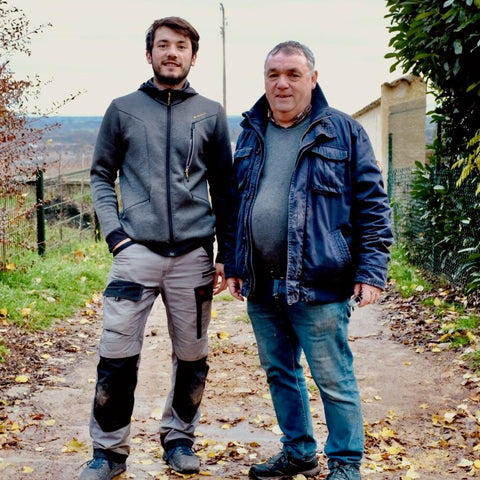
Another must: Domaine Saint-Cyr, run by the Saint-Cyr family with organic farming and natural winemaking. Their Beaujolais Nouveau, often from old vines, is a model of balance between fruit, tension and lightness. These winemakers show that Beaujolais Nouveau can be a wine of immediate pleasure, but also of real character.