

Ça Boit Libre
Damien Bastian
The winegrower who brought the Chasselas grape back into fashion. Discover Savoie wines that are free and alive, with incomparable flavours, from Damien Bastian's Ça Boit Libre. If you don't know these natural wines yet, it's time to try them.
7 products


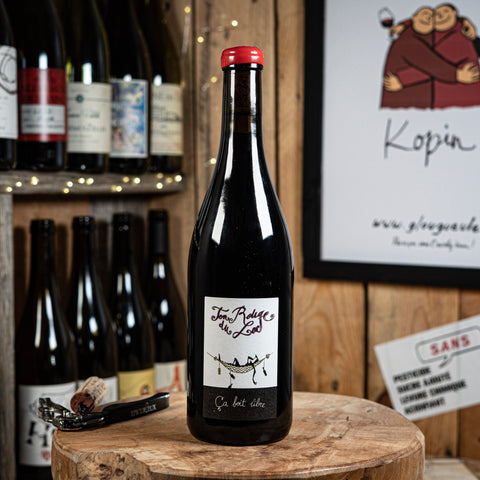
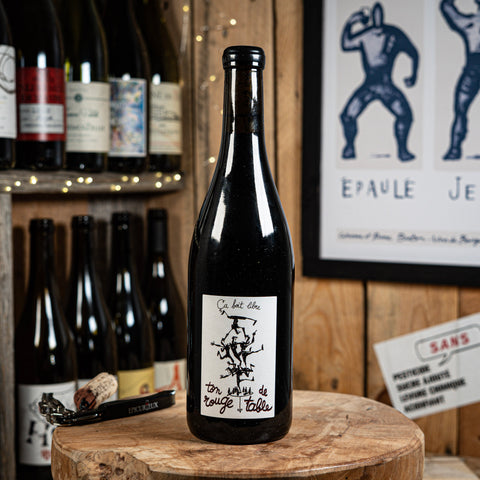

The wines of Domaine Ça Boit Libre
The "Ça Boit Libre" estate
In his forties and a few years at the helm of his estate, Damien Bastian has become a benchmark for natural wine in Savoie. He is the winegrower who brought Chasselas back into fashion. Never heard of it? Time to be curious and taste it!
From Ganevat to "Ça Boit Libre"!
Damien Bastian's story didn't start in the vineyard, but close to the land.
Damien comes from horticulture: he spent years growing vegetables, notably in Chad. Back home, he took a break and worked in restaurants in Geneva. But his passion soon caught up with him through meeting winegrowers. He trained with several of them, above all Jean-François Ganevat, the Jura star who needs no introduction for purists, where he stayed several years. With "Fanfan", who works 25 different grapes for single-plot cuvées sought after worldwide, he learnt the most respectful methods there are.
In 2017 he set up on his own with 0.75 hectares of vines in Marignan, Savoie, near Lake Geneva. In the early years he split his time between his estate and Ganevat's, and also worked with Dominique Lucas on the shores of the lake, where he got to know the unique climate of this corner of Haute-Savoie.
Damien made this new playground his own and tamed Chasselas like few others: and so "Ça Boit Libre" ("drinking free") was born, a name that says it all. You're in for free, living wines!
In 2020 he grew to 4 hectares by taking over Jean-Marie Chappuis's vines, adding Altesse, Gamay and Pinot Noir to his Chasselas. That same year he harvested for the first time in his new building, at Domaine de Marsaz, right on the Swiss border.
The natural cuvées of Damien Bastian
At "Ça Boit Libre", wines are made with the utmost respect for the environment. Harvesting is by hand. Whites are pressed directly, settled overnight and put into casks the next day; all the wines ferment in barrel. Reds undergo semi-carbonic maceration (1 to 3 weeks), with no punching down or pumping over, then go back to tank before being casked at the end of fermentation.
For whites and reds alike, there is no intervention during ageing. Damien racks his wines at the end of spring, sometimes a year later for some cuvées, and blends two months before bottling.
In his whites he seeks fine minerality and wants to capture the tension of his terroirs. In his reds he looks for fruit and lovely roundness, all lifted by freshness.
Among the reds, Ton Rouge d'Élevage is a fruity, lightly spiced Gamay, juicy and very easy to drink. Ton Rouge de Table comes from old Gamay vines Damien sets aside for a fuller, more concentrated micro-cuvée. Ton Rouge du Lac is a Pinot Noir with superb acidity, velvety, with nothing to envy Burgundy. In magnum you'll also find Ton Rouge de Soif, Gamay and Pinot Noir full of fruit and freshness, and Ton Rouge de Grosse Soif, 100% Gamay just the way we like it at Epi-curieux.com: give it a little air and off you go!
Among the whites, Mon Blanc is a taut, fresh 100% Chasselas. Mon Blanc des Alpes, now called Mon Blanc des Haltes, brings together the estate's flagship Chasselas for a lively, razor-sharp wine of unmatched freshness. Mon Blanc de la Haute is a 100% Altesse with everything: fruit, roundness and acidity. Mon Blanc Orangé is a short maceration of Chasselas, aromatic and complex, a must for fans of orange wines. Depending on the year, also look out for Mon Blanc de Secours and Mon Blanc Bronze.
Masterful wines just as we love them at Epi-curieux.com, for lovers of Chasselas, Gamay and Pinot Noir. Originality, juiciness, freshness!
Our favorite wines ❤️
We tasted, we loved it! No mistake with these bottles!






100% grapes
Fast shipping

Delivery from 7€